By Andy & Mary, Co-Owners, Armadillo Coffee Roasters | Austin, TX
When you buy ethical coffee beans online, you’re making a choice that extends well past the cup. The supply chain behind specialty coffee is long, and the decisions made at every step, from how a farmer is compensated to how the beans are processed and transported, determine not just the flavor in your cup but the viability of the farms that produced it. This piece is our attempt to explain what ethical sourcing actually means in practice, why it matters for the coffee you taste, and how we think about it at Armadillo.
What “Direct Trade Coffee Beans” Actually Means
Direct trade is a sourcing model where the roaster builds a purchasing relationship directly with a producer or cooperative rather than buying through commodity brokers or multi-tier distribution. The practical result is more transparency on both sides: the roaster knows more about how the coffee was grown and processed, and the producer receives better compensation and more consistent demand.
For the consumer, direct-trade coffee beans mean traceability. When a product page tells you the farm name, the cooperative, the processing method, and the harvest season, that information exists because someone in the supply chain kept track of it and valued transparency enough to share it.
Not every specialty roaster uses the term “direct trade” in a standardized way. What matters more than the label is whether the sourcing details are actually on the product page and whether the roaster can speak specifically about where the coffee came from.
What This Means for Flavor
Ethical sourcing and flavor quality are connected in a way that’s often undersold. Farmers who are paid fairly and consistently have the economic stability to invest in better processing, better drying infrastructure, and more careful cherry selection. These practices directly affect cup quality. A coffee sourced from a stable, well-compensated farming operation tends to be more consistent lot to lot than commodity coffee sourced purely on price.
Sustainable Coffee Beans Online: Beyond the Label
Sustainability in coffee is a broad term that covers environmental practices, economic fairness, and community impact. At the farm level, sustainable practices include shade-grown cultivation, responsible water use in washing stations, and soil health management. These practices often produce better-tasting coffee because they prioritize plant health and cherry development over yield maximization.
When you buy sustainable coffee beans online from a roaster who sources with intention, you’re supporting a supply chain that’s designed to keep those farms producing quality coffee for the long term. The alternative, commodity sourcing that prioritizes the lowest cost per pound, creates a race to the bottom that degrades both farming conditions and cup quality over time.
Our Little Q as an Example
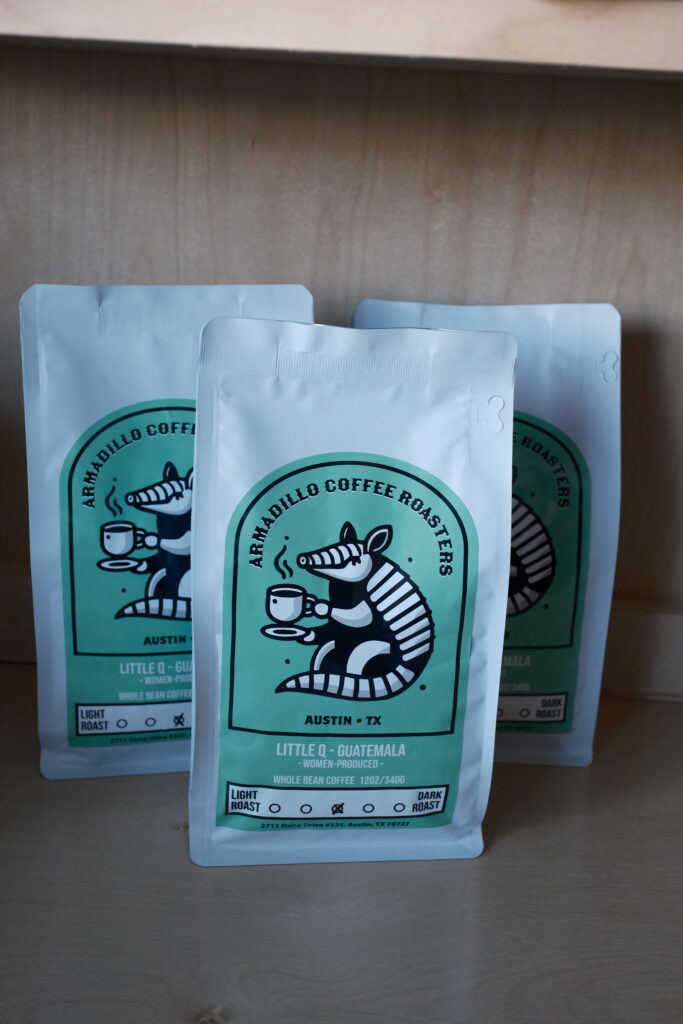
Little Q is one of the clearest examples in our lineup of what ethical sourcing looks like in practice. It’s produced by a women’s cooperative in Guatemala. The cooperative structure means the women who grow and process this coffee have a stake in the outcome and direct access to the income their work generates rather than that income being absorbed by intermediaries.
It’s our most popular drip coffee and pulls beautifully as espresso too. That’s not a coincidence. The care that goes into ethically structured farming relationships tends to produce more consistent, higher-quality raw material. The flavor is the downstream result of decisions made at the farm level.
Whole Bean Coffee Delivery: Why It Preserves Ethical Sourcing Investments
Here’s a connection that doesn’t get made often enough: if a farmer invested in careful cherry selection and precise processing to produce a high-quality lot, and that coffee arrives at your door as pre-ground coffee that’s been sitting in a bag for three months, most of that investment has been lost by the time you brew it.
Whole bean coffee delivery, paired with grinding close to brew time, is how the work done at origin actually reaches your cup. Grinding dramatically increases the surface area exposed to oxygen, accelerating flavor loss. A whole bean stored in a sealed, one-way valve bag preserves origin character far longer than pre-ground coffee at any roast level.
When you order whole bean coffee delivery from a roaster who prints the roast date, you have the information to brew within the peak window. For a light roast like Agave Sunrise, that window opens at three to four weeks post-roast. For a medium roast, the window is broader. Brewing within that window is how ethical sourcing investments actually pay off in the cup.
The Case Study: Agave Sunrise and Origin Transparency
Agave Sunrise is our standard light roast, featuring notes of chocolate, guava, red fruits, and tangerine. The origin detail matters here: these flavor notes exist because of specific growing conditions, processing choices, and harvest timing at the source farm. They aren’t roasted in. They were grown and preserved through careful processing and roasting.
When customers order Agave Sunrise for the first time and taste those fruit notes clearly, the reaction is often surprise. Not because the flavor is unusual, but because they’ve never had a light roast that tasted like anything other than weak or sour coffee. That’s a freshness and roast development story, and it starts at origin.
Coffee Beans for Cold Brew: Does Ethical Sourcing Make a Difference?
Cold brew extracts differently than hot brewing methods. Lower temperature, longer extraction time, and a different solubility profile mean that some flavor compounds that are prominent in hot coffee are muted in cold brew, while others come through more clearly.
For cold brew specifically, medium to dark roasts tend to produce cleaner, more chocolatey results with less acidity. Our Black Gold Espresso Blend works well for cold brew, producing a concentrate with notes of dark chocolate and molasses that holds up well over ice and in milk.
Ethical sourcing matters for cold brew for the same reason it matters for any brew method: the quality ceiling is determined by the raw material. A well-sourced, properly roasted bean produces a better cold brew than a commodity bean, regardless of how long you steep it.
What Our Customers Have Said
Jenna, one of our long-term customers, noted that the sourcing details in our product descriptions were what convinced her to try Armadillo in the first place. She wanted to know where her coffee came from and was tired of product pages that said “sourced from top farms worldwide” without any specifics. That vagueness is a signal, and she recognized it.
The specificity in our sourcing descriptions isn’t a marketing exercise. It’s documentation of the decisions Andy and I made when we selected each coffee. When we can tell you the cooperative, the processing method, and the harvest season, that’s because we know those things because they mattered to us when we chose the lot.
Summary
Ethical sourcing, direct trade relationships, and sustainability aren’t abstract values. They produce better coffee, support farming communities that can invest in quality, and create a supply chain where transparency is standard rather than exceptional. When you buy ethical coffee beans online from a roaster who can name the farm and the cooperative, you’re not paying a premium for a story. You’re paying for the quality that the story produced.
Explore our ethically sourced lineup, including Little Q and Agave Sunrise.
Browse the Agave Sunrise product page for full origin and flavor details, and order with free shipping on purchases over $40.
Visit Armadillo Coffee Roasters to find your next ethically sourced bag.
Frequently Asked Questions
Q: What does direct trade mean for the price I pay?
A: Direct trade usually means the farmer is paid more than commodity market rates. That cost is real, and it’s reflected in specialty pricing. What you get back is better quality, more consistent lots, and the ability to actually trace where your coffee came from.
Q: Is Agave Sunrise available year-round?
A: It’s our standard light roast, so yes. Specific lot details may shift with harvests, but Agave Sunrise is always available. The flavor profile stays consistent because Andy adjusts the roast profile when the green coffee changes.
Q: Can I use Little Q for cold brew?
A: You can. It’s a cleaner, lighter cold brew than you’d get from a dark roast. If you want something richer and more chocolatey for cold brew, Black Gold is a better fit. Depends on your preference.
Q: How do I know the sourcing claims on your bags are accurate?
A: The details on our product pages come directly from our sourcing relationships. If we say it’s a women’s cooperative in Guatemala, that’s because that’s exactly what it is. We don’t use generic language because we don’t have generic sourcing.
Leave a Reply
You must be logged in to post a comment.